If you are new to digital marketing, understanding SEO in digital marketing is one of the first things you should learn. But what is SEO in digital marketing exactly — and why does everyone keep talking about it?
In this beginner’s guide I will explain SEO in digital marketing with real examples, show you how it works, and tell you exactly how to get started.
What Is SEO in Digital Marketing?
Imagine you run a digital marketing training institute in Kolkata. When someone in Kolkata searches ‘best digital marketing course in Kolkata’ on Google — SEO is what determines whether your website appears on page 1 or page 10. Good SEO means your website shows up first. Bad SEO or no SEO means your competitor gets the student instead of you.
SEO stands for Search Engine Optimisation. In digital marketing, SEO is the process of improving a website so it appears higher in Google search results — without paying for ads.
When someone searches “best digital marketing course in India” on Google, the websites that appear on page 1 are there because of SEO. The higher your website ranks, the more free visitors you get.
In simple words — SEO helps Google understand what your website is about so it can show it to the right people at the right time.
Why Is SEO Important in Digital Marketing?
SEO is one of the most valuable skills in digital marketing because:
- It brings free organic traffic — you do not pay Google per click
- Results are long lasting — a well-ranked article can bring traffic for years
- It builds trust — people trust Google’s top results more than ads
- It works 24 hours a day — even when you are not working
- 75% of people never scroll past page 1 of Google — if you are not there you are invisible
SEO in digital marketing gives businesses a competitive advantage over those who rely only on paid advertising. For digital marketers, SEO is one of the highest-paying and most in-demand skills.
How Does SEO Work? (Step by Step)
Understanding SEO starts with understanding how Google works. Google follows 3 steps:
Step 1 — Crawling
Google uses automated programs called crawlers or spiders to browse the internet. They visit websites, read the content, and follow links from page to page — discovering new content constantly.
Step 2 — Indexing
After crawling, Google stores everything in a massive database called the index. Think of it like a giant library. If your page is not in Google’s index it simply cannot appear in search results.
Step 3 — Ranking
When someone searches for something, Google scans its index and ranks the most relevant and helpful pages in order — best result first. Google uses over 200 ranking factors to decide this order.
What Are the 4 Types of SEO?
There are 4 main types of SEO every digital marketer should know. Each type of SEO in digital marketing plays a specific role in improving your overall search visibility.
1. On-Page SEO
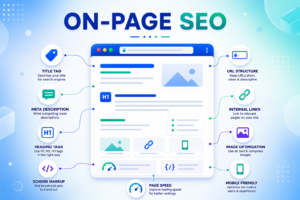
On-page SEO refers to everything you optimise directly on your website pages. This includes:
- Writing high quality relevant content
- Using the right keywords naturally
- Optimising title tags and meta descriptions
- Using proper heading structure (H1, H2, H3)
- Adding descriptive alt text to images
- Creating clean, keyword-rich URLs
- Building a strong internal linking structure
On-page SEO is the best starting point for beginners because it is entirely within your control.
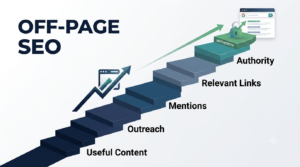
2. Off-Page SEO
Off-page SEO refers to actions taken outside your website that impact your Google rankings. The most important off-page SEO factor is backlinks — links from other websites pointing to yours.
When a reputable website links to your content, Google sees it as a vote of trust. The more quality backlinks you earn the more authoritative your website appears to Google.
Other off-page SEO activities include:
- Guest posting on other websites
- Social media presence
- Brand mentions across the internet
- Directory submissions
3. Technical SEO
Technical SEO involves the behind-the-scenes improvements that help Google crawl and index your website effectively. This includes:
- Website loading speed
- Mobile friendliness
- HTTPS security certificate
- XML sitemap
- Fixing broken links
- Core Web Vitals
Even if your content is excellent, poor technical SEO can prevent Google from properly reading and ranking your website.
4. Local SEO
Local SEO is focused on helping businesses appear in location-based searches. For example — “digital marketing agency in Kolkata” or “SEO specialist near me”.
Local SEO is especially important for small businesses targeting customers in a specific city or region. It involves optimising your Google Business Profile and getting listed in local directories.
What Are Keywords and Why Do They Matter?
Keywords are the words and phrases people type into Google. SEO is fundamentally about understanding what your target audience is searching for and creating content that answers those searches. Keywords are the foundation of SEO in digital marketing — without them Google cannot match your content to the right searches.
For example:
- “what is SEO in digital marketing” — keyword
- “free SEO tools for beginners” — keyword
- “how to rank on Google first page” — keyword
Two types of keywords every beginner must know:
Short-tail keywords — short broad terms like “SEO” or “digital marketing”. Very high search volume but extremely competitive and hard to rank for as a new website.
Long-tail keywords — longer specific phrases like “what is SEO in digital marketing for beginners” or “how to do keyword research for free in India”. Lower volume but much easier to rank for and attract more targeted visitors.
Beginner tip: Always start with long-tail keywords. They are your fastest path to getting real traffic from Google.
Is SEO an IT Skill?
SEO is not strictly an IT skill although it does involve some technical knowledge. SEO sits at the intersection of technology, content, and marketing.
You do not need to be a programmer or developer to do SEO. Most SEO tasks — like keyword research, content writing, and on-page optimisation — require no coding at all.
However having a basic understanding of how websites work, HTML structure, and website performance does help — especially for technical SEO.
In India, SEO is classified as a digital marketing skill not an IT skill. It is taught in marketing courses and is in high demand across industries.
How Do I Learn SEO as a Beginner?
Understanding what is SEO in digital marketing helps you build a sustainable online presence without spending money on advertising. Here is a practical step-by-step path to learning SEO as a complete beginner:
Step 1 — Learn the Basics
Start with free resources — Google’s own SEO Starter Guide, Ahrefs’ beginner blog, and Moz’s Beginner’s Guide to SEO. Spend 2-3 weeks reading and taking notes.
Step 2 — Get Certified
Complete free certifications to build credibility:
- Google Digital Garage — Fundamentals of Digital Marketing (free)
- Semrush SEO Fundamentals (free)
- HubSpot Content Marketing (free)
Step 3 — Practice on a Real Website
The best way to learn SEO is by doing it on a live website. Build a personal blog or portfolio site and treat it as your SEO laboratory. Document your progress — what works and what does not.
Step 4 — Use Free SEO Tools
Start with free tools before investing in paid ones:
- Google Search Console — monitor your website’s performance
- Google Analytics 4 — track your visitors
- Google Keyword Planner — keyword research
- Ahrefs Free Tools — backlink and keyword data
- Screaming Frog — crawl your website for technical issues
- RankMath — on-page SEO for WordPress
Step 5 — Stay Updated
SEO changes constantly. Follow SEO news sources like Search Engine Journal, Search Engine Land, and Google’s own Search Central blog to stay current.
Conclusion
SEO is one of the most powerful and valuable skills in digital marketing today. Whether you are a student, a business owner, or someone looking to start a career in digital marketing — understanding SEO is non-negotiable. The key things to remember:
- SEO in digital marketing means getting free organic traffic from Google
- Google works through crawling, indexing, and ranking
- There are 4 types of SEO — on-page, off-page, technical, and local
- Keywords are the foundation of every SEO strategy
- Anyone can learn SEO with the right resources and consistent practice
I am Raya Mandal — a digital marketing fresher from Kolkata currently learning SEO by doing it on this live website. We hope this guide helped you understand what is SEO in digital marketing with real examples.
Frequently Asked Questions About SEO
What is SEO in simple words?
SEO is the process of making your website appear higher in Google search results so more people can find it — without paying for advertising. It involves creating helpful content, using the right keywords, and improving your website’s technical performance.
What is an SEO example?
A simple SEO example — if you write a blog post titled ‘Best SEO Tools for Beginners in India’ and optimise it correctly with the right keywords, proper headings, and quality content, Google may rank it on page 1 when someone searches that phrase. Every visitor who finds your article through Google is free organic traffic — that is SEO working in action.
What are the 5 components of SEO?
The 5 main components of SEO are: keywords, content, on-page optimisation, link building, and technical SEO. Each component plays a specific role in helping your website rank higher on Google. Together they form a complete SEO strategy.
What is the difference between SEO and Google Ads?
SEO brings organic (free) traffic by ranking naturally in search results over time. Google Ads places your website at the top of results instantly but you pay for every click. SEO takes longer to show results but provides sustainable long-term growth. Google Ads stop working the moment you stop spending money.

Pingback: What Is Keyword Research? A Beginner's Complete Guide
Pingback: On-Page SEO Made Simple: 10 Essential Elements Guide
Pingback: Technical SEO Explained: A Beginner's Complete Guide
Pingback: Off-Page SEO: 7 Proven Strategies to Build Authority
Pingback: AEO Explained: Why ChatGPT Doesn't Know Your Brand Exists